

TL;DR
- Background checks miss most fraudsters: ACFE’s 2022 report found only 6% had a prior fraud conviction and 87% were never charged or convicted.
- Behavior tells more: 85% of fraudsters displayed behavioral red flags, and the 2019 Global Fraud Study found most were first-time offenders.
- Assessing counterproductive work behavior tendencies during recruitment, as Adam Milo’s risk assessment does, addresses the risk that records cannot.
Yet proper assessment of individuals being brought in is often less refined. Any employee may be a risk to the organization – the only question is, to what extent? As in all situations where credibility is at stake, if we can measure that level of risk in advance, then we are better set up to manage it.
What Is Counterproductive Work Behavior and How Can It Be Prevented?
When employees are hired without proper assessment, the candidates who should have been removed will often bring with them counterproductive work behavior (CWB), which will undermine the goals and interests of a business, causing harm to its people, products, and work environment. Since simple candidate history and background checks are just not enough to assess and reduce the risk of CWB in organizations today. This must be done with richer risk assessment and pre-employment integrity testing, using a more refined solution.
Why Is Better Risk Assessment Essential for Dealing With Occupational Crime?
The Global Fraud Study released in 2019 found that most occupational fraudsters are first-time offenders. And even with the sort of background checks conducted, more than 96% did not reveal any prior misconduct or ‘red flags.’ These findings are cause for concern and demand a closer look:
Are Background Checks No Longer Effective?
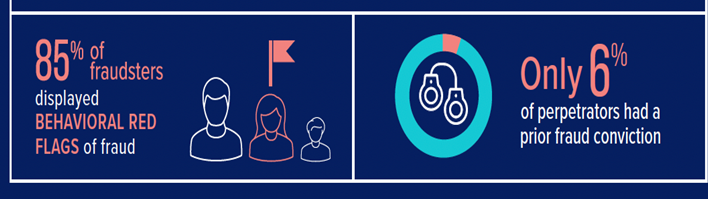
- Candidate history alone is not enough. A 2022 Occupational Fraud report, released by the Association of Certified Fraud Examiners, shows that only 6% of perpetrators had a prior fraud conviction. A whopping 87% were never charged or convicted. Their actions may have been dealt with internally or otherwise fallen below the radar, as 83% of perpetrators were never even terminated or punished for their fraud by employers.
What Do ‘Red Flags’ Really Indicate?
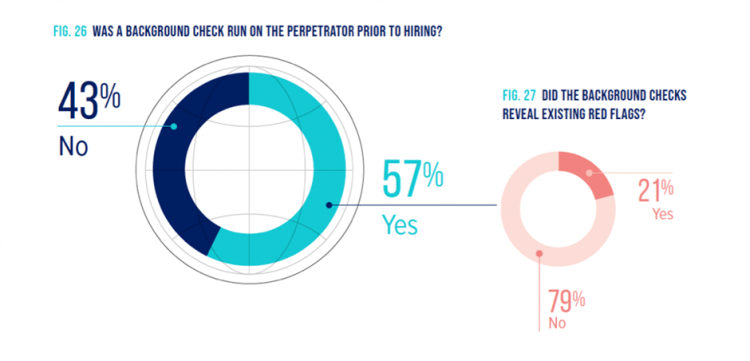
- According to the same 2022 report, 85% of fraudsters did display the behavioral ‘red flags’ of fraud. Which means that if there are optimally assessed, they can be screened out. But are traditional checks able to do that screening successfully and spot the ‘red flags?’ The study showed that the majority of perpetrators were given background checks prior to being hired. But for a full 79% of them, the results revealed nothing.
What Kind of Assessment Solution Can Help Your Organization Reduce Risk in Hiring New Employees?
A more evolved and sophisticated risk assessment platform can both directly and indirectly evaluate an individual’s personal integrity and leaning towards CWB. Integrating knowledge from the fields of security, psychology, psychometry, and talent acquisition, this kind of adaptive and interactive tool simulates an in-depth interview, providing the basis for sensitive, well-informed, data driven decisions. Critically, it can be customized by each client based on the recruitment field characteristics, the size of the candidate pool, and even national or cultural norms. It can also set the threshold or be used as a classification tool based on risk scores.
It is not unusual for organizations today to ward off the external threats with their most refined solutions. But wise organizations also understand that the risks that may come with individual hires require the same seriousness, subtlety, and strategy – because internal threats can in fact often be more critical than the external ones.
To better your recruitment process – learn more about the Adam Milo risk assessment solution here. Because as your organization’s gatekeeper and first line of defense, you require more than a mere background check in your toolbelt. You need a powerful risk assessment platform that will fundamentally keep your organization safe.
Frequently Asked Questions
Why do background checks miss most occupational fraudsters?
Most fraudsters have no record to find. ACFE’s 2022 Occupational Fraud report shows that only 6% of perpetrators had a prior fraud conviction and 87% were never charged or convicted, often because cases were handled internally.
What percentage of fraudsters show behavioral red flags?
According to ACFE’s 2022 report, 85% of fraudsters displayed behavioral red flags of fraud. That makes behavioral risk assessment a stronger predictor than a criminal record check.
Are most occupational fraudsters first-time offenders?
Yes. The 2019 Global Fraud Study found that most occupational fraudsters are first-time offenders, and in more than 96% of cases background checks revealed no prior misconduct or red flags.
How does counterproductive work behavior relate to occupational crime?
Occupational crime is the serious end of counterproductive work behavior, which ranges from minor policy violations to fraud and theft. Identifying CWB tendencies at hiring is the most effective way to prevent occupational crime.
What kind of assessment reduces the risk of hiring a future fraudster?
One that measures behavioral risk indicators directly rather than relying on records. Adam Milo’s risk assessment solution is built to identify these indicators during recruitment.